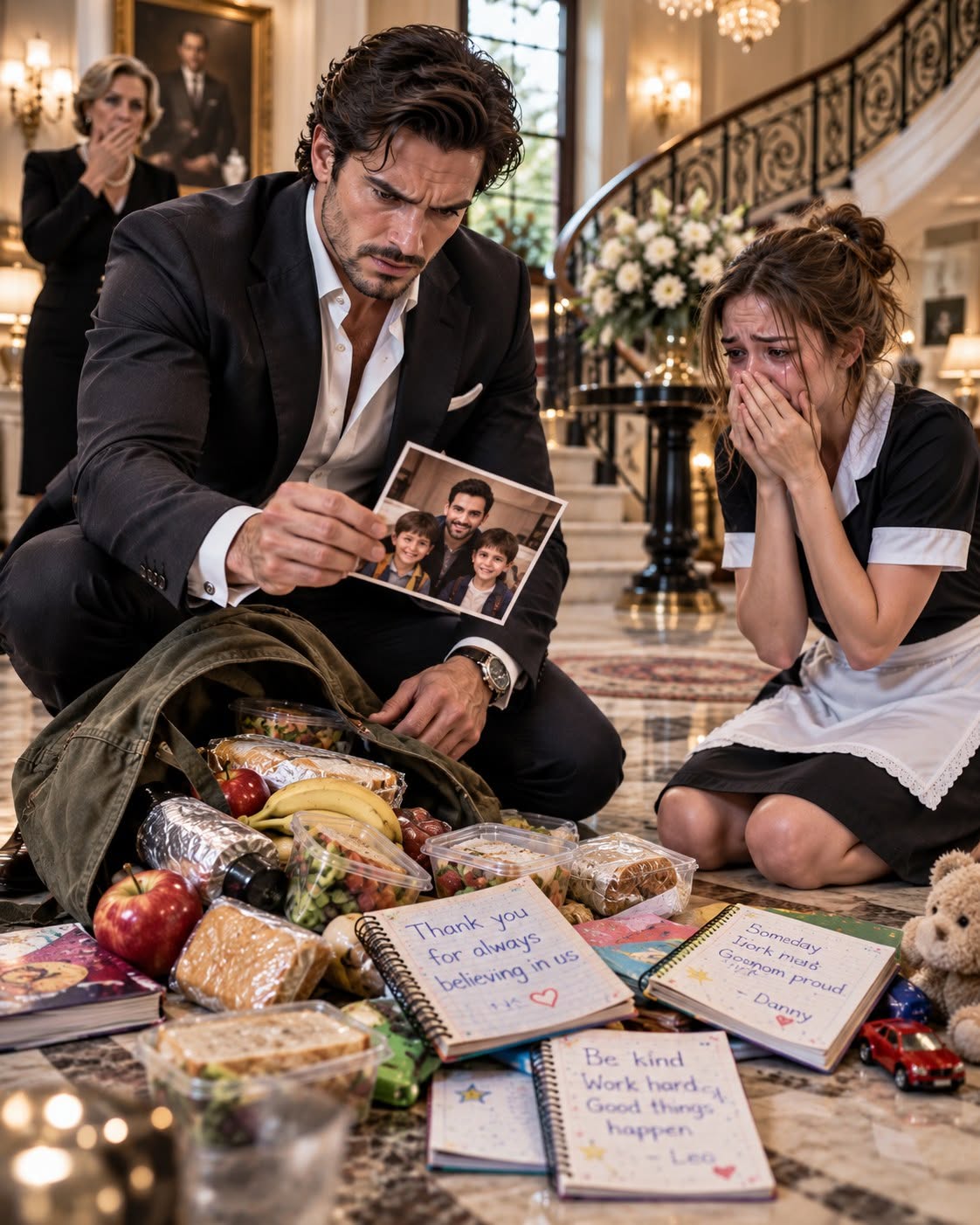
I accused my housekeeper of stealing after watching her sneak out of my mansion every night with a bag that arrived empty and left stuffed, so I cornered her and ripped it from her trembling hands. But when food and children’s notebooks spilled across my marble floor, I discovered the poorest woman in my house hadn’t stolen a dollar from me, and one name written inside a schoolbook made the truth even more personal.
My name is Zo Rossi.
In Chicago, my name opens doors.
It also makes people nervous.
I paid my staff well and insisted everyone ate dinner before leaving my estate.
Steak. Pasta. Fresh bread. Whatever my chef prepared.
Then Tessa Cole started working for me.
Twenty-six. Quiet. Painfully thin.
Every evening at seven, everyone ate.
Tessa disappeared.
Then I noticed her canvas bag.
Empty when she arrived.
Bulging when she left.
I don’t ignore patterns.
So I tested her.
I left $10,000 on a table.
Tessa moved it, cleaned beneath it, then replaced every bill.
I left a confidential USB drive beside my computer.
Untouched.
Still, that bag kept leaving full.
Friday night, I waited beside the staff entrance.
“Show me the bag.”
Tessa went pale.
“Mr. Rossi, please.”
“Open it.”
Her eyes filled with tears.
“You’ll fire me.”
That convinced me.
I grabbed the bag.
She reached for it.
The zipper tore.
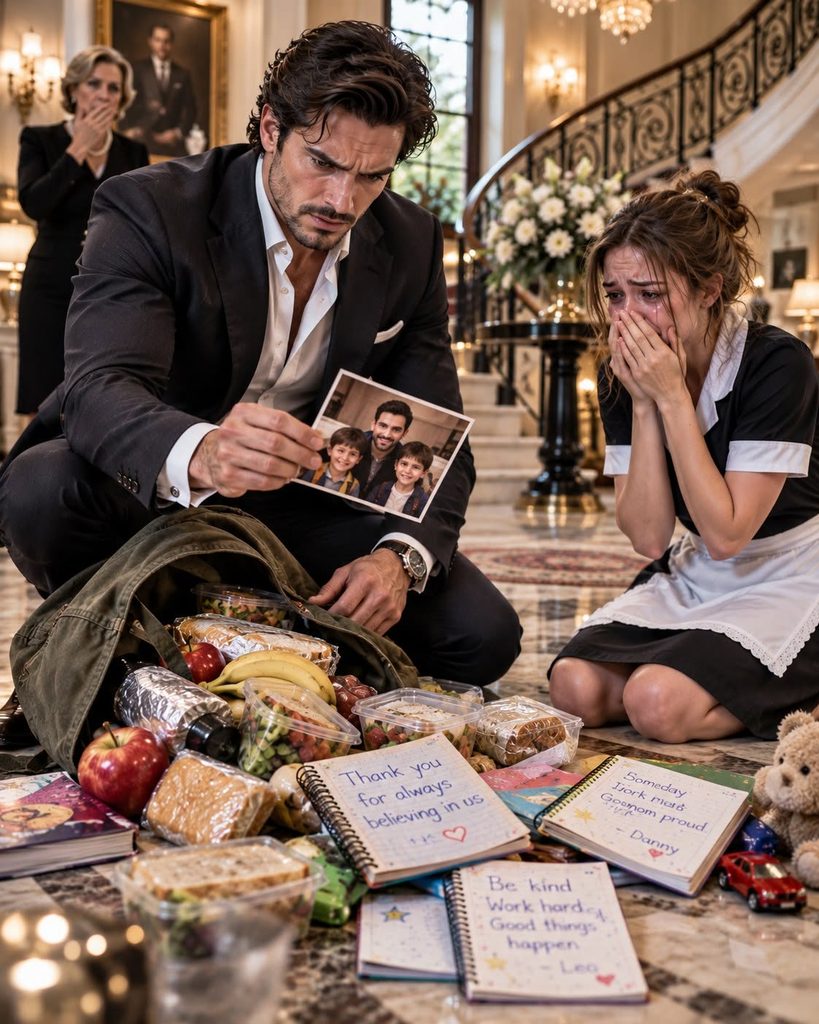
Everything spilled across the marble.
Sandwiches.
Fruit.
Bread wrapped in napkins.
Plastic containers filled with food.
Then three battered school notebooks.
I stared at her.
“What is this?”
“My brothers.”
Her voice broke.
Her mother had died the year before. Her father was gone. Tessa was raising two younger brothers while working another job after leaving my house.
She wasn’t stealing my food.
She was saving her own staff meals.
“You don’t eat dinner?”
She shook her head.
“Sometimes coffee is enough.”
It wasn’t.
But she’d convinced herself it was because two boys were waiting at home hungry.
Something inside me shifted.
The next morning, I changed my household policy.
Any employee with family could take meals home.
No questions.
No embarrassment.
And every night, my chef quietly packed three dinners for Tessa.
I never mentioned her hunger again.
Then, days later, I found one of those notebooks beneath the staff-room table.
I opened it to identify which brother it belonged to.
A photograph slipped out.
Tessa stood between two little boys.
Behind them was a man I recognized immediately.
My older brother, Luca.
The brother my family had buried seven years earlier.
On the back, someone had written:
**Tessa, if anything happens to me, never let the Rossis find the boys.**
I read it twice.
Then I looked toward the kitchen, where Tessa was laughing softly.
For the first time, I wondered whether she’d really come to my house looking for work.
Or whether she’d come because those boys were Rossis too.